
How to Prepare for Your Child's First Ski Race: A Family-Friendly Guide to Vertical Challenge Race Day

Your child is standing at the start gate, skis pointed downhill, goggles reflecting the winter sun. Maybe they look excited. Maybe they look nervous. Maybe they are wondering why everyone else seems to know exactly what to do.
Take a breath. Their first ski race does not have to be perfect to be memorable.
With a little planning and the right mindset, race day can become one of the best family skiing experiences of the season. This guide explains how to prepare for your child’s first ski race, what to expect at a Vertical Challenge event, and how parents can help kids feel confident, comfortable, and ready to have fun.
Meta description: Preparing for your child’s first ski race? Get practical race day tips for registration, warm-ups, fueling, winter comfort, and family-friendly fun at Vertical Challenge.
What to Expect at a Vertical Challenge Ski Race
A Vertical Challenge race day is about much more than getting from the top of the course to the bottom. It is a welcoming winter event where families gather, kids try something new, and the entire mountain feels a little more festive.
While schedules and activities may vary by resort, most families can expect a combination of:
- Registration or event check-in
- A designated race area and starting gate
- Time to warm up and get comfortable on the snow
- A race run for participating children and adults
- Family-friendly activities, partner activations, prizes, or recognition
- Plenty of time to connect with other families in the lodge and base area
The most important thing to know is that a Vertical Challenge event is designed to be approachable. Your child does not need to be a seasoned racer. They simply need to be ready to participate, listen to event staff, and enjoy the experience.
See the Vertical Challenge season schedule and registration information at www.ski-vc.com.

How to Prepare for Your Child’s First Ski Race
The best preparation starts before race morning. You do not need an elaborate training plan. A calm evening, a weather check, and a packed gear bag can make a big difference.
Review the event details
Before heading to the mountain, check the event information on the Vertical Challenge website. Confirm:
- Registration requirements and deadlines
- Event start time
- Recommended arrival time
- Parking information
- Where check-in will take place
- Whether lift tickets or other resort access are needed
- Any age-group or participation details
Plan to arrive early enough that your family is not rushing from the car to the starting area. Give yourselves time to park, use the restroom, check in, put on gear, and locate the race area.
Practice the basics, not the pressure
If your child is nervous, keep preparation simple. A few relaxed ski days before the event can help them practice:
- Stopping with control
- Turning comfortably
- Riding the lift
- Following directions
- Skiing around other people
- Getting up after a fall
There is no need to talk constantly about speed or placement. For a first race, confidence is more valuable than trying to shave seconds off a run.
Pack everything the night before
Race morning is not the time to search for one missing glove. Lay out clothing and equipment the evening before, and label items that are easy to lose.
A good ski race checklist includes:
- Skis or snowboard
- Boots and poles, if needed
- Helmet
- Goggles
- Race bib or registration materials, if provided
- Waterproof jacket and ski pants
- Moisture-wicking base layers
- Warm mid-layer
- Ski socks
- Mittens or gloves
- Spare gloves and socks
- Neck warmer or balaclava
- Hat for time spent off the mountain
- Hand and foot warmers
- Sunscreen and lip balm
- Water bottle
- Snacks
- A dry change of clothes for the ride home
Keep your child’s boots, gloves, and outerwear dry and indoors overnight whenever possible. Starting the day warm is a small step that can make the entire experience more comfortable.
Registration, Warm-Up, and the Race Start
Knowing what happens before the race can help settle first-time jitters.
Check in and get oriented
At registration, your family may receive a bib, wristband, event information, or directions to the race area. Ask staff where your child should meet and when participants should be ready.
This is also a good time to point out the lodge, restrooms, meeting areas, and a family gathering spot. If siblings or grandparents are attending, choose a place where everyone can reconnect after the run.
Give your child time to warm up
A warm-up does not need to be intense. The goal is to help your child wake up their muscles and get comfortable on the snow.
Try:
- A few easy stretches or leg swings
- Light jogging or jumping in ski boots
- One or two relaxed free-ski runs
- Gentle turns and controlled stops
- A quick review of where to start and where to finish
If there is a course inspection or organized group warm-up, follow the instructions from event staff. Your child may have a chance to see the course before racing, which can make the run feel more familiar.
Keep the start-line message short
The start gate is not the place for a technical lecture. Offer one clear reminder and encouragement:
- “Look where you want to go.”
- “Take your time.”
- “Have fun and ski safely.”
- “I’ll see you at the bottom.”
Then let your child focus. A calm parent helps create a calm racer.
Fueling and Hydration for Kids Ski Racing
Race days often include more waiting than children expect. Your child may use plenty of energy skiing, walking in equipment, standing in line, and staying warm.
Start with a familiar breakfast that includes carbohydrates and protein. Oatmeal with fruit, whole-grain toast with peanut butter, eggs and a bagel, or yogurt with granola are all practical options. If Stonyfield Organic is part of the event experience or already a favorite at home, yogurt can be an easy, familiar breakfast or snack choice.
Pack small snacks that your child will actually eat:
- Fruit
- Granola bars
- Trail mix
- Crackers
- A peanut butter and jelly sandwich
- Cheese or yogurt
- An ALOHA snack product, if it is something your child already enjoys
Avoid introducing a brand-new food on race morning. Familiar choices are usually best.
Hydration matters in cold weather, too. Kids may not feel thirsty while skiing, so encourage small sips throughout the day. A water bottle that is easy to open is helpful. A warm drink during a lodge break can also make a long event feel more comfortable.
Race Day Tips for Staying Warm in New England Weather
New England winter conditions can change quickly. A sunny morning can become windy, snowy, or damp by afternoon, so layers are essential.
Dress your child in:
- A moisture-wicking base layer
- A warm mid-layer such as fleece or light insulation
- A waterproof and wind-resistant outer layer
Keep the warm outer layers on while your child is waiting. If they are wearing a race suit or lighter clothing for the run, remove extra layers only when it is time to start. Put the jacket and pants back on immediately afterward.
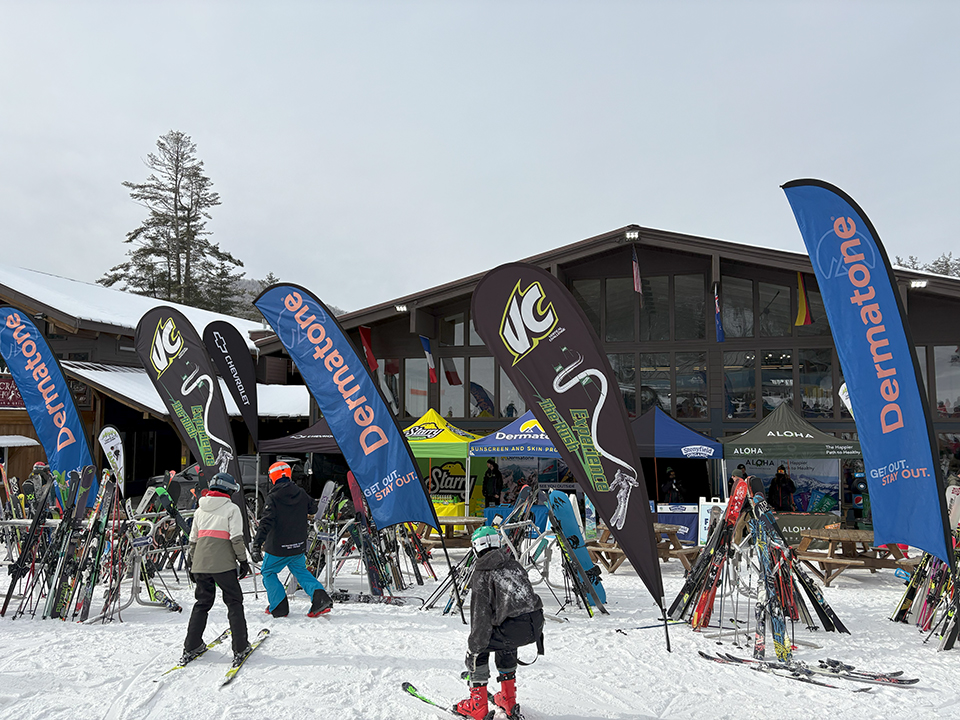
Do not forget exposed skin. Snow reflects sunlight, even on cloudy days. Apply sunscreen to faces, ears, and other exposed areas, and use lip protection as needed. Depending on the event, families may also see Dermatone partner displays or products in the event area. These kinds of practical winter-care reminders are especially useful on bright, windy mountain days.

Parent Coaching Tips That Build Confidence
Your role is not to become the race-day coach. Your role is to be the support crew.
Before the race, focus on excitement rather than expectations. Instead of asking, “Do you think you can win?” try:
- “What are you looking forward to?”
- “What part of the course looks fun?”
- “What is one thing you want to remember?”
After the run, ask open-ended questions:
- “How did it feel?”
- “What did you enjoy?”
- “What did you learn?”
- “Would you like to do it again?”
Try not to lead with time, ranking, or mistakes. Kids ski better when they feel supported rather than evaluated. A fall, a slow turn, or a missed gate can become part of the story: not a reason the day was unsuccessful.
Most importantly, watch your child ski. Cheer for their effort, smile at the finish, and remind them that you are proud they tried something new.
Why Families Return to Vertical Challenge
Families return because the experience feels bigger than a single race run.
It is the excitement of seeing a child stand at the start gate for the first time. It is the sibling who decides they want to race next year. It is the warm lodge afterward, the shared snacks, the medals and photos, and the chance to spend an active winter day together.
The partner village adds to that atmosphere, too. Brands such as Stonyfield Organic, ALOHA, and Dermatone help create the kind of on-mountain moments that families remember, while Vertical Challenge brings the event, community, and energy together in a welcoming setting.
That combination makes kids ski racing feel less intimidating and more inviting. Your child gets to challenge themselves, but the day remains centered on family skiing, connection, and fun.
Final First-Race Reminder
The best answer to how to prepare for your child’s first ski race is simple: arrive early, pack warm layers and familiar fuel, learn what to expect at a ski race, and keep the focus on participation rather than performance.
Use this ski race checklist, offer a few positive race day tips, and give your child room to enjoy the moment. Whether they finish with a fast run, a big smile, or a new story about falling in the soft snow, they have already accomplished something important by showing up.
See the full season schedule at www.ski-vc.com, and register your family for the next Vertical Challenge event.